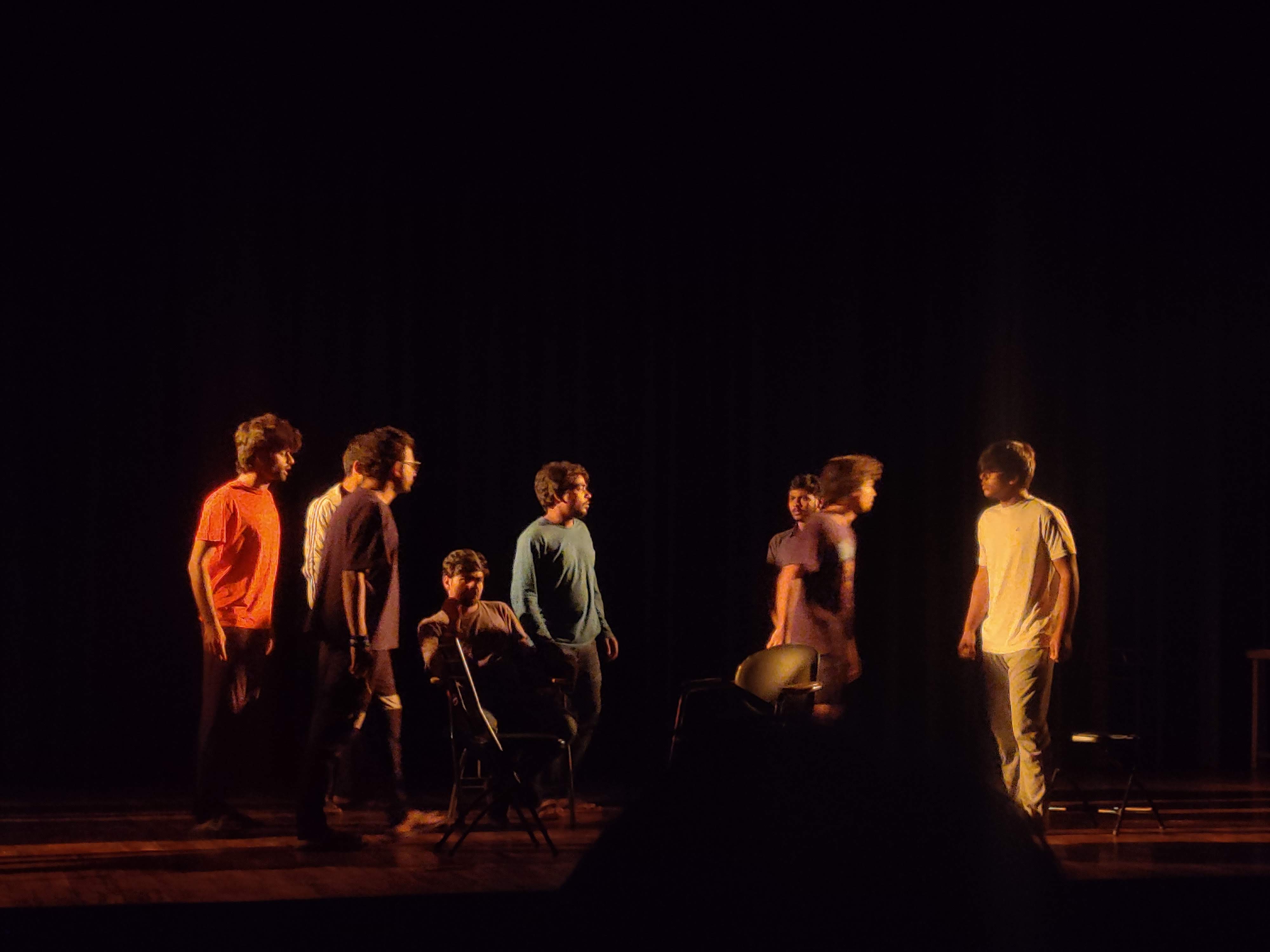
About Dramatics Society
The Dramatics Society is a vibrant cultural body at Bhuwaneshwari Dayal College, dedicated to nurturing
theatrical
talent, stagecraft, and creative expression among students. The society provides a platform for students to
explore
drama, street plays (nukkad natak), skits, and one-act plays, contributing significantly to the holistic
development of
participants. The infrastructure supporting the Dramatics Society is designed to facilitate rehearsals,
performances,
and the overall theatrical experience.
Here is a detailed breakdown of the key infrastructural components supporting the Dramatics Society:
1. Performance and Stage Infrastructure
The most critical asset for any dramatics society is a dedicated performance space.
-
College Auditorium / Main Hall: The college possesses a large hall or auditorium that serves as the
primary venue for
theatrical performances. This space is equipped with::
-
Raised Proscenium Stage: A proper stage with curtains, wings for entry and exit, and adequate depth
to accommodate sets
and actors.
-
Green Room: A backstage area adjacent to the stage where performers can prepare, change costumes, and
apply makeup
before going on stage.
-
Seating Capacity: Sufficient seating to accommodate a significant portion of the student body during
annual cultural
events and inter-college competitions.
-
Seating Arrangement: A large auditorium with fixed or movable seating to accommodate a
significant
portion of the
student body for annual festivals and competitions.
-
Open-Air Stage / Amphitheatre (if available): The campus may also feature an open-air stage or a
semi-circular
amphitheatre, which is ideal for:
-
Street Plays (Nukkad Natak): Performances that require direct audience interaction and a more informal,
immersive
setting.
-
Daytime Rehearsals: Utilizing natural light for practice sessions
-
Sound and Acoustics: The auditorium is equipped with a Public Address (PA) system, including microphones
(corded and
wireless), speakers, and audio mixers to ensure clear dialogue delivery and sound effects during
performances.
-
Stage Lighting System: A basic to intermediate lighting rig with spotlights, floodlights, and colored gels
to create
mood, highlight actors, and enhance the visual impact of productions.
2. Rehearsal and Practice Spaces
Consistent, disciplined practice is the backbone of any successful theatrical production. The society is
supported by
dedicated spaces for this purpose.
-
Rehearsal Hall / Multipurpose Room: A large, empty hall with:
-
Open Floor Space: Sufficient room for blocking (movement planning), choreography, and full-cast
run-throughs.
-
Wall-to-Wall Mirrors: Essential for actors to observe their body language, expressions, and physicality
during
rehearsals.
-
Basic Sound System: For playing background scores and practicing cues.
-
Classrooms (After Hours): The society often has access to general-purpose classrooms after college hours for
smaller
group rehearsals, script reading sessions, and character workshops.
-
Outdoor Spaces: The college grounds or designated open areas are used for:
-
Voice Projection Exercises: Practicing dialogue delivery in open spaces to strengthen vocal power.
-
Physical Theatre and Movement Workshops: Activities that require ample open space.
3. Costume, Prop, and Set Design Support
The visual elements of a play are crucial, and the infrastructure supports these creative aspects.
-
Costume and Prop Store Room: A secure, dedicated storage room within the auditorium or cultural block,
equipped with:
-
Racks and Hangers: For organizing and preserving costumes.
-
Shelves and Bins: For storing props of various sizes, from handheld items (letters, phones) to larger
set pieces.
-
Makeup Corner: A designated area with mirrors, seating, and storage for stage makeup kits.
-
Set Construction and Scenery Workshop: A basic workshop space (or access to a maintenance shed) with:
-
Basic Tools: Hammers, saws, screwdrivers, and paint brushes.
-
Work Tables: For painting backdrops and constructing lightweight flats and set pieces.
-
Storage for Materials: Space for lumber, fabric, paint, and other scenic elements.
-
Art Room Collaboration: The society often collaborates with the college's Art Room/Studio for painting
backdrops and
creating detailed props. This space provides easels, paints, brushes, and clay.
4. Administrative and Organizational Support
-
Cultural Committee Office: The Dramatics Society operates under the broader Cultural Committee, which
provides:
-
Meeting Space: A room for planning productions, holding auditions, and coordinating with faculty
advisors.
-
Notice Boards: Dedicated boards to announce auditions, rehearsal schedules, play synopses, and event
dates.
-
Computer and Printer: For creating scripts, schedules, and promotional materials (posters, tickets).
-
Audio-Visual Documentation: Access to basic recording equipment (cameras, tripods) to:.
-
Record Rehearsals: For actors to review and improve their performances.
-
Archive Productions: Preserving performances for future reference and promotional use.
-
Faculty Mentorship: A faculty member (often from the Hindi, English, or Cultural departments) acts as the
society's
mentor, providing guidance, logistical support, and liaison with the college administration.
5. Awareness and Promotion Infrastructure
-
Notice Boards and Digital Signage: Physical and digital displays across the campus to promote upcoming
plays, auditions,
and festival participation.
-
Auditorium Announcements: The college's public address system is used to make announcements about
dramatics-related
activities..
-
Social Media Integration: While not physical infrastructure, the society uses the college's official social
media
channels to share production stills and event invitations.
Areas for Potential Enhancement
To further elevate the society's capabilities, the college could focus on:
-
Dedicated Black Box Theatre: A flexible, intimate performance space with retractable seating and adaptable
lighting,
ideal for experimental theatre and smaller productions.
-
Light and Sound Control Booth: A dedicated booth within the auditorium for professional operation of
lighting and sound
equipment during performances.
-
Upgraded Sound and Lighting Equipment: Investing in a digital sound console, wireless microphones, and LED
intelligent
lighting fixtures for more polished productions.
-
Professional Workshops: Bringing in external theatre professionals to conduct workshops on acting, voice
modulation,
stage combat, and set design.
Conclusion
The Dramatics Society at Bhuwaneshwari Dayal College is supported by a functional and enabling infrastructure
that
balances the essentials of performance with the needs of rehearsal and creative production. From the main stage
of the
auditorium to the prop room and rehearsal hall, this infrastructure provides students with the tools to bring
stories to
life, build confidence, and develop teamwork and communication skills. The college's commitment to supporting
this
creative outlet underscores its dedication to holistic education, ensuring that the campus resonates not just
with
academic pursuits but also with the energy and vibrancy of theatrical expression.
The Dramatics Society is a vibrant and creative hub within Bhuwaneshwari Dayal College, dedicated to nurturing
theatrical talent, stagecraft, and dramatic expression among students. It provides a platform for students to
explore acting, direction, scriptwriting, stage design, and street theatre (nukkad natak), contributing
significantly to their confidence, communication skills, and overall personality development. The infrastructure
supporting the Dramatics Society is designed to facilitate every aspect of theatrical production, from initial
rehearsals to final performances.
Here is a detailed breakdown of the key infrastructural components:
1. Performance Venues and Stage Infrastructure
The quality of a dramatic performance is heavily influenced by the stage and auditorium facilities.
-
College Auditorium: The primary venue for major theatrical productions is the college auditorium, which
features:
-
Proscenium Stage: A raised, framed stage with curtains, wings for actor entries/exits, and adequate
depth to accommodate
elaborate sets and large casts.
-
Seating Capacity: Sufficient seating (often several hundred) to host annual cultural festivals,
inter-college drama
competitions, and flagship productions.
-
Green Room: A dedicated backstage area with mirrors, seating, and basic amenities where performers can
prepare, change
costumes, and apply makeup before going on stage.
-
Backstage Area: Space for prompters, stage managers, and quick costume changes during live performances.
-
Open-Air Stage / Amphitheatre: If available on campus, an open-air stage or semi-circular amphitheatre is
ideal for:
-
Street Plays (Nukkad Natak): Performances that require direct audience engagement and a more informal,
immersive
atmosphere.
-
Daytime Rehearsals: Utilizing natural light for practice sessions.
-
Small-Scale Productions: Intimate performances with minimal set requirements.
-
Sound and Acoustics System: The auditorium is equipped with:
-
Public Address (PA) System: Amplifiers, speakers, and audio mixers to ensure clear dialogue delivery and
sound effects.
-
Microphones: A mix of corded standing microphones and wireless lapel or handheld microphones for actors.
-
Acoustic Treatment: Basic soundproofing to minimize echo and enhance vocal clarity.
-
Stage Lighting System: A functional lighting rig is essential for creating mood and focus:
-
Spotlights and Floodlights: To highlight actors and key moments.
-
Colored Gels and Filters: To create different atmospheres (e.g., warm tones for romance, cool tones for
tragedy).
-
Dimmer Controls: To adjust light intensity smoothly during performances.
2. Rehearsal and Practice Spaces
Consistent, disciplined rehearsal is the foundation of any successful theatrical production.
-
Dedicated Rehearsal Hall: A large, multi-purpose hall allocated to the Dramatics Society, featuring:
-
Open Floor Space: Ample room for blocking (movement planning), choreography, ensemble work, and
full-cast run-throughs.
-
Wall-to-Wall Mirrors: Essential for actors to observe and refine their body language, facial
expressions, and physical
movements.
-
Portable Curtains / Dividers: To create separate areas for simultaneous small-group rehearsals.
-
Basic Sound System: For playing background scores, sound effects, and cue practice.
-
Classroom Access: After college hours, general-purpose classrooms are made available for:
-
Script Reading Sessions: Small group readings and character analysis.
-
Voice and Speech Workshops: Focused practice on diction, projection, and accent training.
-
Auditions: Conducting initial tryouts for new productions.
-
Outdoor Spaces: College grounds and open lawns are utilized for:
-
Voice Projection Exercises: Practicing dialogue delivery in open air to strengthen vocal power and
resonance.
-
Physical Theatre Workshops: Movement-based activities and improvisation exercises requiring expansive
space.
3. Costume, Prop, and Set Design Support
The visual and tangible elements of a play bring the script to life.
-
Costume and Prop Storage Room: A secure, organized storage facility featuring:
-
Costume Racks and Hangers: For preserving and categorizing period costumes, traditional attire, and
modern outfits.
-
Shelving Units: For storing props of various sizes, including handheld items (letters, books, phones),
decorative pieces
(vases, lamps), and larger props (furniture, weapons).
-
Makeup Corner: A designated area with lighted mirrors, stools, and storage for stage makeup kits, wigs,
and prosthetic
materials.
-
Set Construction Workshop / Scene Shop: A basic workshop space equipped with:
-
Hand and Power Tools: Hammers, saws, screwdrivers, drills, and measuring instruments.
-
Workbenches: For constructing lightweight flats, platforms, and set pieces
-
Paint and Brush Storage: For painting backdrops, scenery flats, and props.
-
Material Storage: Space for lumber, fabric, adhesives, hardware, and other scenic materials.
-
Art Room Collaboration: The society works closely with the college's Art Department / Studio, which
provides:
-
Easels and Drawing Boards: For designing backdrops and set renderings.
-
Art Supplies: Paints, brushes, canvas, clay, and other materials for detailed prop-making and scenic
painting.
4. Administrative and Organizational Support
Behind every successful production is efficient planning and administration.
-
Cultural Committee Office: The Dramatics Society operates under the broader Cultural Committee, which
provides:
-
Meeting and Planning Space: A room for executive committee meetings, production planning, and
coordination with faculty
advisors.
-
Notice Boards: Dedicated boards in high-traffic areas to announce auditions, rehearsal schedules,
production details,
and event dates.
-
Computer and Printer Access: For creating scripts, schedules, promotional posters, tickets, and
production reports.
-
Faculty Mentorship: A faculty member (typically from the Hindi, English, or Performing Arts departments)
serves as the
society's mentor, providing:
-
Artistic Guidance: Input on script selection, direction, and performance quality.
-
Logistical Support: Liaising with the administration for permissions, funding, and resource allocation.
-
Discipline and Professionalism: Instilling a sense of responsibility, punctuality, and teamwork.
-
Audio-Visual Documentation: The society has access to basic recording equipment (digital cameras,
camcorders, tripods)
for:
-
Rehearsal Recordings: Allowing actors to review and improve their performances.
-
Production Archiving: Preserving final performances for historical record, promotional use, and
competition submissions.
5. Awareness and Promotion Infrastructure
-
Notice Boards and Digital Displays: Physical notice boards and digital screens across the campus are used
to:
-
Promote upcoming productions with posters and trailers.
-
Share rehearsal schedules and audition calls.
-
Celebrate achievements and awards won by the society.
-
Public Address System (Campus Announcements): The college's PA system is used for making announcements about
dramatics-related events, auditions, and workshops.
-
Collaboration with College Media: The society works with the college's newsletter, magazine, and social
media teams to
reach a wider audience.
Areas for Potential Enhancement
To further elevate the Dramatics Society's capabilities, the college could focus on:
-
Dedicated Black Box Theatre: A flexible, intimate performance space with retractable or movable seating,
adaptable
lighting grids, and soundproofing. This is ideal for experimental theatre, small productions, and actor
training.
-
Professional Light and Sound Control Booth: A dedicated booth within the auditorium with professional-grade
mixing
consoles, lighting boards, and operator windows for seamless technical direction during performances.
-
Upgraded Equipment: Investing in digital sound processors, high-quality wireless microphones, LED
intelligent lighting
fixtures, and a follow-spot for more polished productions.
-
Costume and Prop Design Lab: A dedicated lab with sewing machines, fabric storage, mannequins, and design
tables to
support in-house costume creation and alteration.
-
Annual Theatre Festival Infrastructure: Resources to host an annual inter-college theatre festival,
including guest
artist accommodations, workshop spaces, and competition management systems.
Conclusion
The Dramatics Society at Bhuwaneshwari Dayal College is supported by a well-rounded and practical infrastructure
that
enables students to explore the transformative power of theatre. From the main stage of the auditorium to the
rehearsal
hall, prop room, and workshop, this ecosystem provides the tools and spaces necessary for creative expression,
skill
development, and collaborative teamwork. The college's commitment to supporting this artistic outlet reflects
its
dedication to holistic education, ensuring that the campus resonates not only with academic rigor but also with
the
energy, passion, and vibrancy of dramatic arts. Through this infrastructure, students gain confidence, empathy,
communication skills, and a lifelong appreciation for the performing arts.